The OnBoard Brief

Curated healthcare news, strategy, and signals for healthcare leaders.

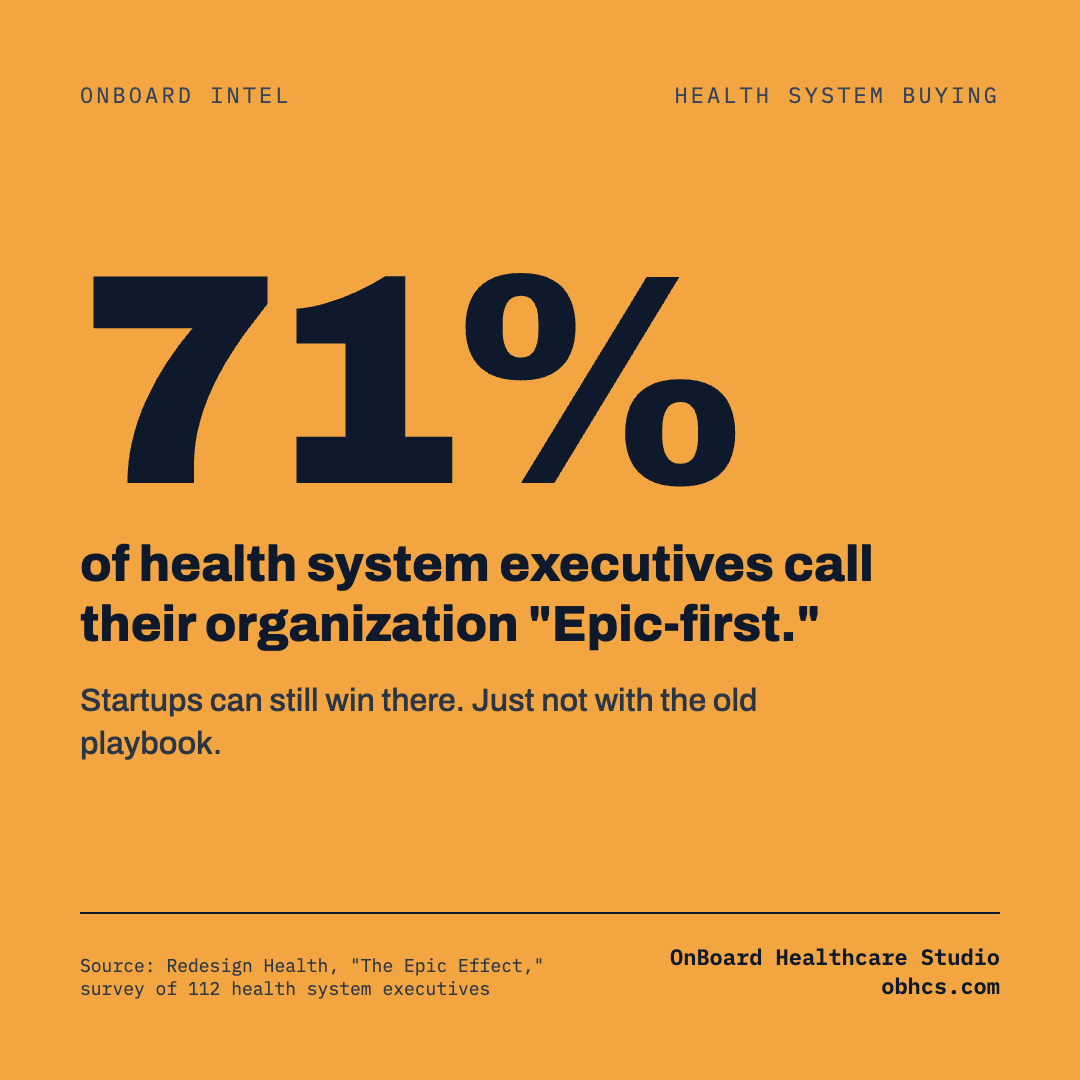
OnBoard Intel stat card: 71% of health system executives call their organization “Epic-first.” Startups can still win there. Just not with the old playbook.

Issue 002 · October 2026

Can Epic do this?

If you sell into health systems, that question is now asked about your product in nearly every deal. Usually before you are in the room.

A recent Redesign Health survey of 112 health system executives found 71% call themselves “Epic-first.” 80% expect that to intensify. Not one said they would look outside Epic first.

That does not mean startups cannot win. It means the old playbook does not.

Here is what we would tell a Seed–Series C company selling into providers right now:

  • Answer the Epic question before they ask it. Your positioning should say exactly what you do that Epic does not, and how you live inside Epic workflows rather than next to them.
  • Pick your ground. Executives pointed to ambient documentation and imaging AI as the places outside vendors can still win. If you are competing head-on with a native module, you need a very good reason.
  • Know where the money actually sits. 43% say new AI spend hits department budgets first, and half of department heads can buy on their own. That is your entry point. But plan the path to enterprise IT review from day one, or you will win the pilot and stall at the contract.

Integration is not a technical line item anymore. It is the sales strategy.

We have helped companies navigate EHR partnerships and get from pilot to contract. If Epic keeps coming up in your deals, tell us what is stuck.

Source: Redesign Health — The Epic Effect, survey of 112 health system executives

Illustration of a performance-based contract with a gold seal beside a rising chart

Issue 001 · October 2026

Your buyers just rewrote the contract. Most digital health companies have not noticed.

PHTI’s 2026 purchasing survey dropped this week. The headline: 57% of employers, health plans, and health systems now use performance-based contracts for digital health. 85% of those put at least a quarter of fees at risk.

And the metric vendors miss most often? Cost savings. The thing on the first slide of almost every pitch deck.

Here is what that means if you are a Seed–Series C company:

  • Your pricing model is now a risk model. If you cannot say which outcomes you will stake fees on, a buyer will pick them for you.
  • Your engagement numbers need to hold up to someone else’s claims data. “Enrolled” does not count anymore. Active use and clinical milestones do.
  • Your sales team is negotiating actuarial terms. Most were hired to run demos.

Budgets are flat for most purchasers, and they are cutting the number of vendors they keep. The companies that survive the next renewal cycle will be the ones that built contracting, measurement, and reporting into the commercial engine, not bolted on after the pilot.

We have sat on the buyer side of these deals. If you are rethinking how you price and contract, tell us what is stuck.

Source: Peterson Health Technology Institute — 2026 State of Digital Health Purchasing